

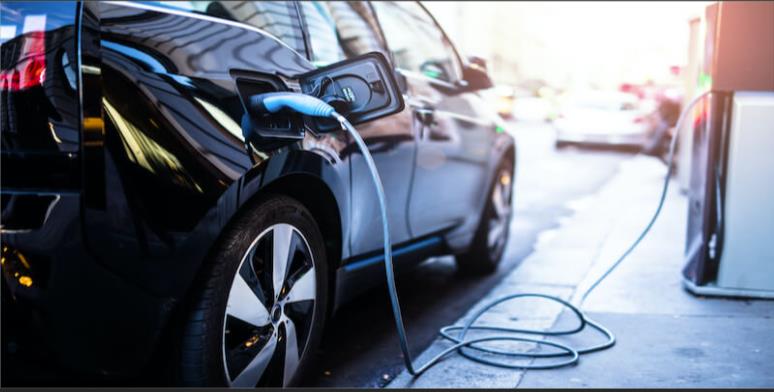
On January 7, 2026, the Ministry of Industry and Information Technology (MIIT) issued official interpretation on the key points of GB 18384—2025 Electric vehicles safety requirements, a national mandatory standard that shall be implemented on July 1, 2026.GB 18384-2025 is a revision of the currently effective 2020 version. It is drafted under the organization and management of SAC/TC114/SC27 (Electric Vehicles) with the purpose of aligning and harmonizing with international standards like UN R100, UNECE R20 and ISO 6469-3 etc., and playing the role of standards for guiding sector development.
 | The main technical revisions of GB 18384-2025 include:
|
 Update specific aspects of the conditions for treating the same type as equivalent in the type approval requirements.
In regards to the implementation date, according to the official interpretation, for new models applying for type approval, the implementation will start from July 1, 2026. For models that have already obtained type approval, the implementation will start from July 1, 2027, with a one-year extension.
The significance of GB 18384-2025 lies in the fact that it is cited in the Notice of Implementing National Mandatory Standards for Electrical Vehicles (which is equal to a provision for electrical vehicles) issued by the Equipment Industrial Development Center of MIIT in May of 2020, making it a mandatory market access criteria for EVs in the China market. Its implementation is also expected to have following effects:
Guarantee the safety of consumers' lives and property.
Strengthen the bottom line of safety.
Optimize the standard system.
Adapt to technological development.
Support the high-quality and healthy development of the industry.
Enhance overall coordination.
Facilitate the application of technologies on a global scale.
For foreign stakeholders, the revision of mandatory requirements will definitely initiate direct impacts therefore it is advised to review the latest requirements stipulated in GB 18384-2025 and take necessary actions to ensure compliance. Another fact worth noting is that, the standard was firstly published in 2001 as a three-part standard series and were identical adoptions of ISO/DIS 6469 series (2000 version back then), but since the second round of revision in 2020, the standard only uses ISO 6469 as a reference instead of directly adoption, meaning the technical requirements are not identical or closely similar to the ISO standards anymore. Such fact may require more careful and thorough attention from foreign stakeholders in terms of staying compliance.
Top Read Articles
Switch articles-
 2026.04.17
Chinese National Standards in Foreign Languages Now Free for Reading – APR, 2026
-
 2026.04.15
Implementation Details Clarified for CCC Certification Model Change – APR, 2026
-
 2026.04.02
Drafting Units Recruited for Technical Guidance on Water Footprint Assessment – MAR, 2026
-
 2026.03.30
China Launches First National DPP Standardization Working Group – MAR, 2026
-
 2026.03.26
Implementation Summary Outlines Past and Future of Cross-border Data Transfer – MAR, 2026